As mentioned in earlier posts, the immediate neighborhoods still has many remains of the time when it was feeding Paris through its gargantuesque ‘Marché des Halles‘. In his unique style, Emile Zola once named this area Le ventre de Paris (the belly of Paris). As far as good food is concerned, whatever you do around the flat, you will definitely come across reminiscence of these times.
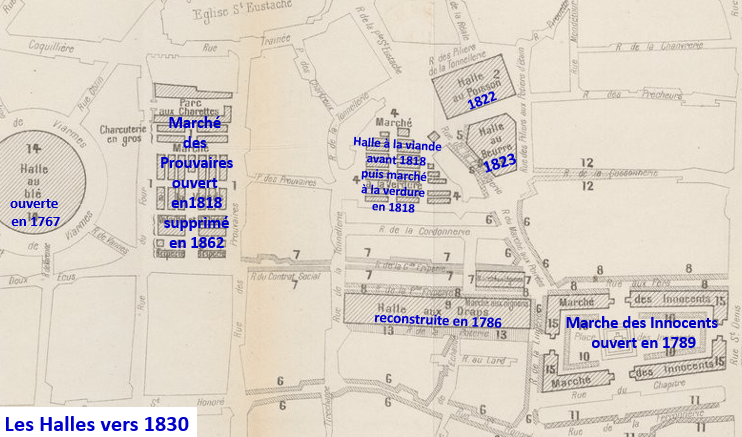
It all started when the ‘Halle aux blés‘ (now the Pinault collection Museum), was established in 1763. Other wholesale food markets would follow suit: meat market (1818), fish market (1822), dairy market (1823) etc
In the years 1880’s, Victor Baltard, conceived a new modern structure reuniting all these market under 12 roofs: the Pavillons Baltard. The initial project with which he won the architecture consultation was constructed with a traditional stone and roof structure. But it is said that Napoleon III’s Imperatrice Eugenie was so enthusiastic about London’s Crystal Palace (1851) that she influenced the later pick of a metal and glass structure.
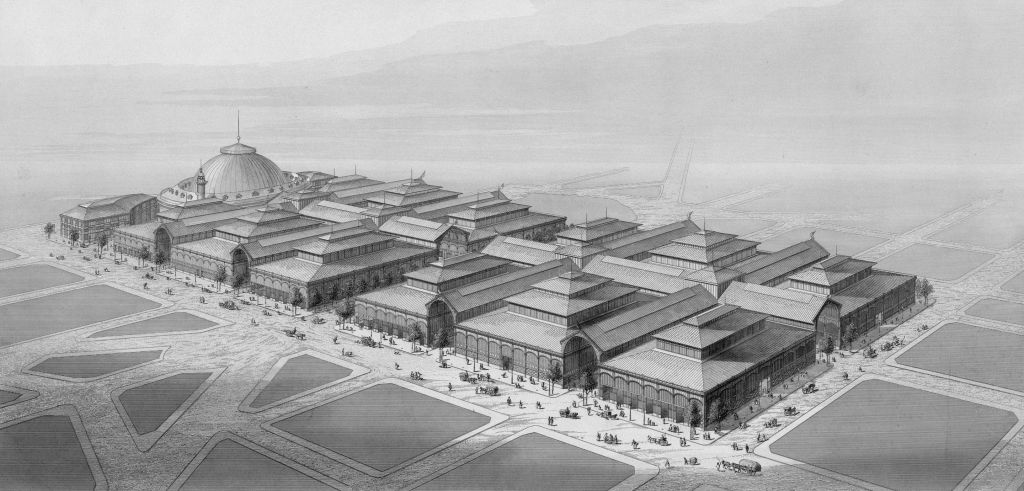
This central structure has been feeding Paris until 1969, when it was transferred to Rungis (near Orly airport) and La Villette. The city of Paris was going under many deep transformations at the time, but none as controversial as what would become the Trou des Halles (the hole of Les Halles).
The plan was to destroy the Pavillons Baltard and build instead a modern hub giving access to new metro lines and modern shopping facilities. The battle for the preservation of the Baltard structure had been running for over a decade, only topped by Victor Hugo’s Hernany battle, the eternal quarrel of the ancients and moderns.
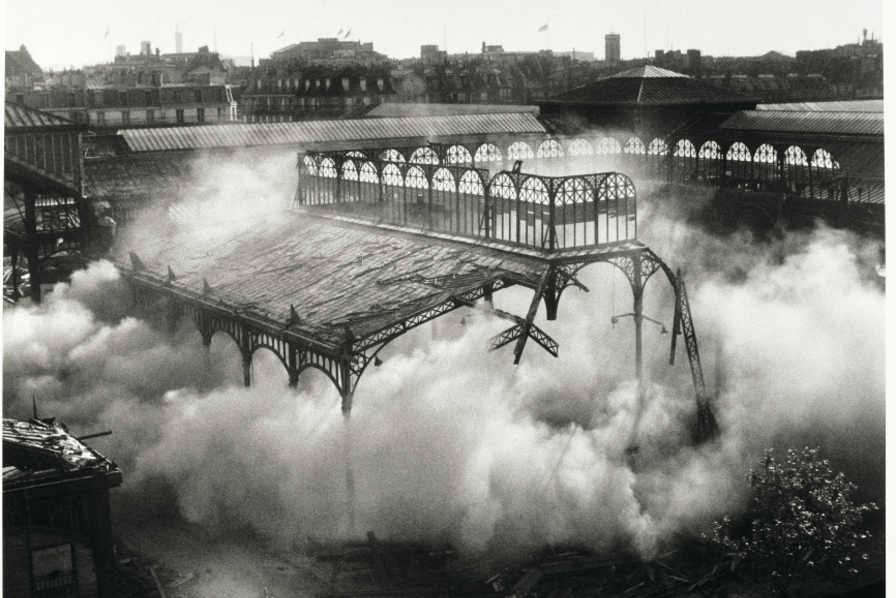
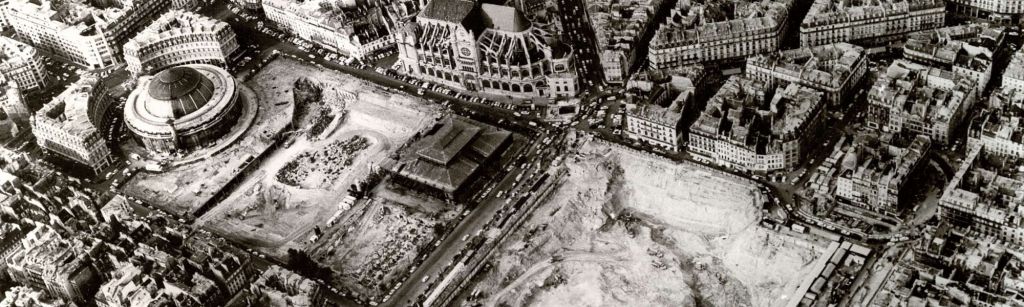
From and architectural standpoint it’s been an all-along nightmare, bringing any project into a controversial standstill. In 1974, newly elected President Giscard d’Estaing decides to create a large garden instead of the controversial International Commerce Building. It takes 3 architecture consultations to come with the “Forum des Halles” project, finished in the 1980s.

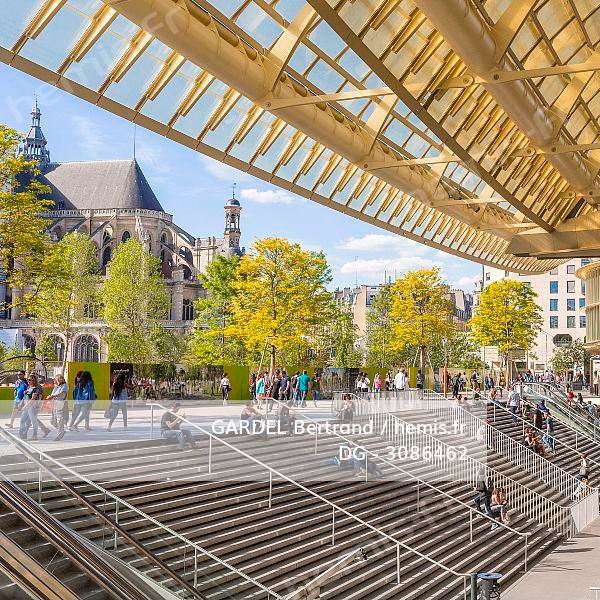
But for many Parisian, this architecture only reminded of the decade-long Trou des Halles. It aged badly, and a new project was requested in the early 2000’s. Many controversies later, the Canopé and the new Nelson Mandela garden were inaugurated, together with the Pinault Collection Museum.
The new layout makes it easier to access the undergrown transit system, and also opened a clear walking path going from the Marais district to the Louvre Museum, with the Centre Georges Pompidou and the Pinault Collection Museum along the way. Now that the trees have grown, I must say it is quite a nice park available right around the corner.
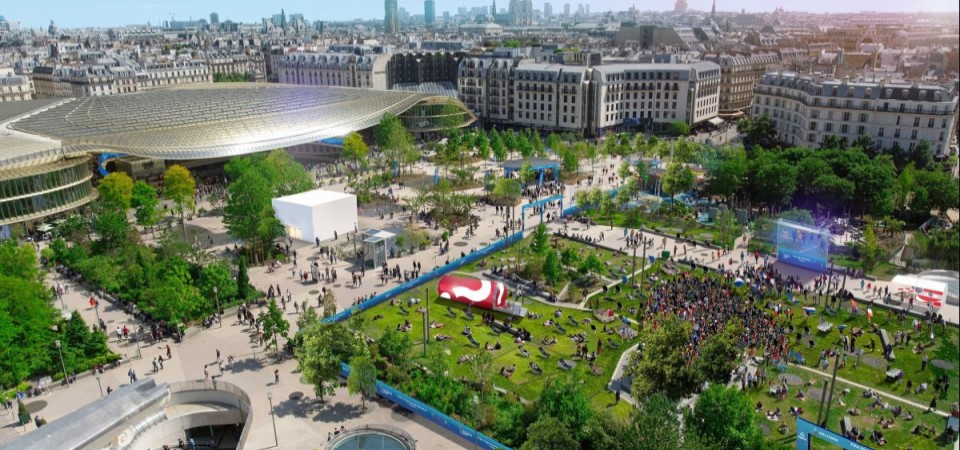
Now, after all these changes, and despite the huge central shopping mall which was created right in the center of Paris, we can still enjoy great food stores, such as the Comptoir de la Gastronomie, or the foodies stores of the rue Montorgueil, already featured in two previous posts (rue Montorgueil 1 and rue Montorgueil 2).
But for most movie buff, Les Halles will always be remembered as the place where Marcel Carné is supposed to set one of its most famous scene from Quai des Brumes (1938), although this also is controversial. This is when Jean Gabin deliver his famous line to Michèle Morgan: “T’as d’beaux yeux tu sais“, in his unique cheeky Paris street accent, to which she answered, her voice trembling(*), “Embrasse moi“.
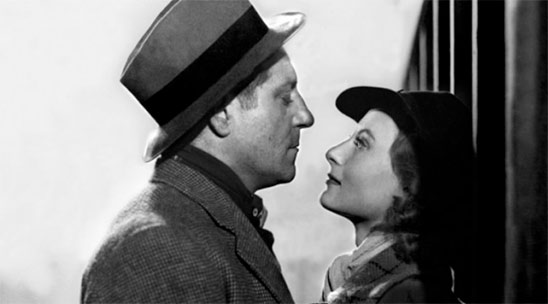
With this unforgettable line, one can only conclude that the transformation of Les Halles over the last two centuries definitely moved their center of gravity from “belly of Paris”, as Zola described it, to “heart of Paris”, making it one of the best location to enjoy the city.
(*) If you speak french, here is a link to a 1956 interview from Michèle Morgan about this famous kiss. She’s been asked about it all along her career, and she would deliver different versions nearly every time, entertaining the mysteries about this scene.
 Rue Jean Jacques Rousseau