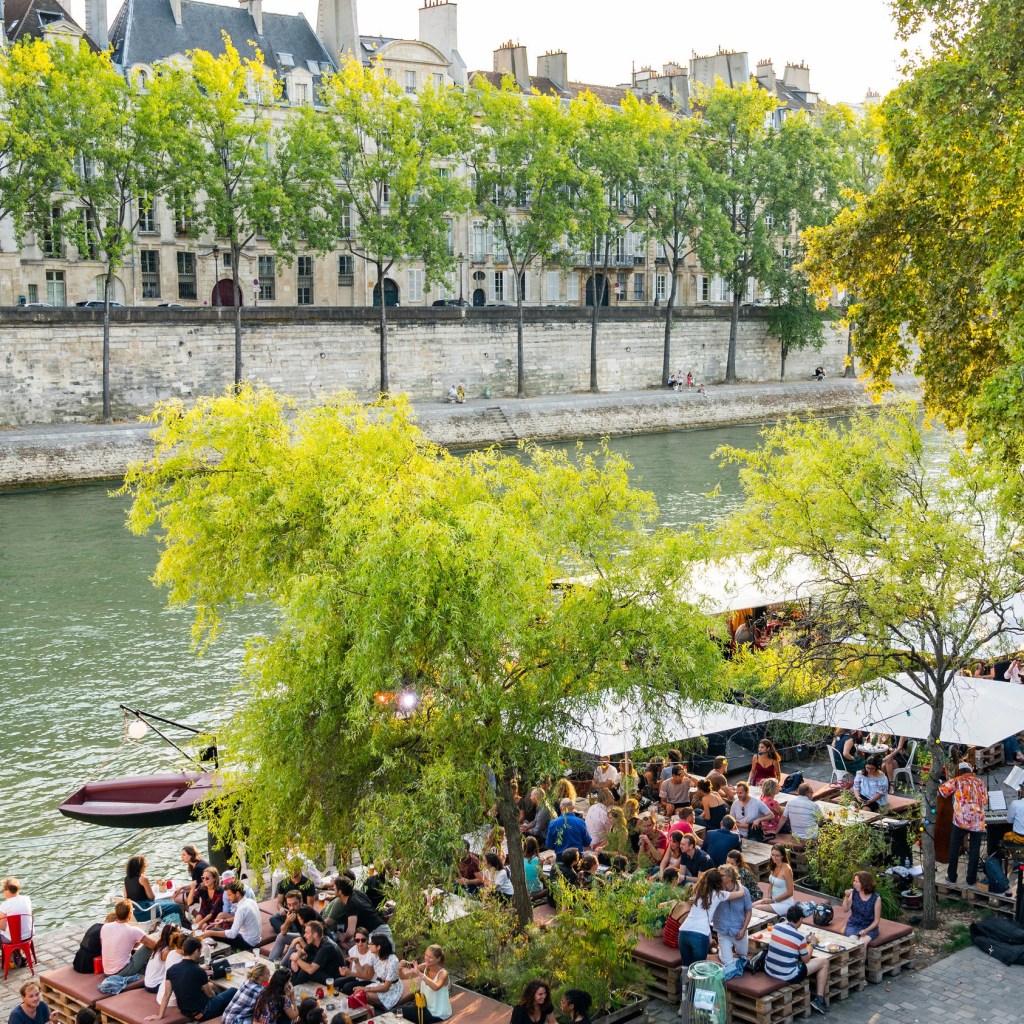
In the 70’s, French President Pompidou, in love with the “Bagnoles” (cars) created a highway crossing Paris West to East, right along the Seine banks. It started in the right bank and was such a success that a left bank highway was added a few years later. It did in fact bring lots of traffic crossing Paris from the inside instead of going around. It took many decades of political fight to close the Seine banks to cars, and transform them into one of the best walk in town.
This itinerary isn’t the shortest one, but we think you’ll enjoy it more than the direct crossing of Le Marais, along the rue des Francs Bourgeois (a.k.a. shop street, to be avoided at all costs if you ask us). It can easily be combined with a lunch along the way, in one if the nice spots you will cross.
So the first step is to reach the Seine bank. We advise to cross the Jardin des Halles, and move directly South to reach stairs which are next to the Louvre SE end.
Then you have a beautiful walk Eastward (you can’t get confused, on the other direction there is a tunnel). You will admire the Conciergerie, on the Ile de la Cité, then it is the Ile Saint Louis, famous for the unity of its architecture, especially on its Northern side. Coffee & bars are available along the way, before you get back to street level.
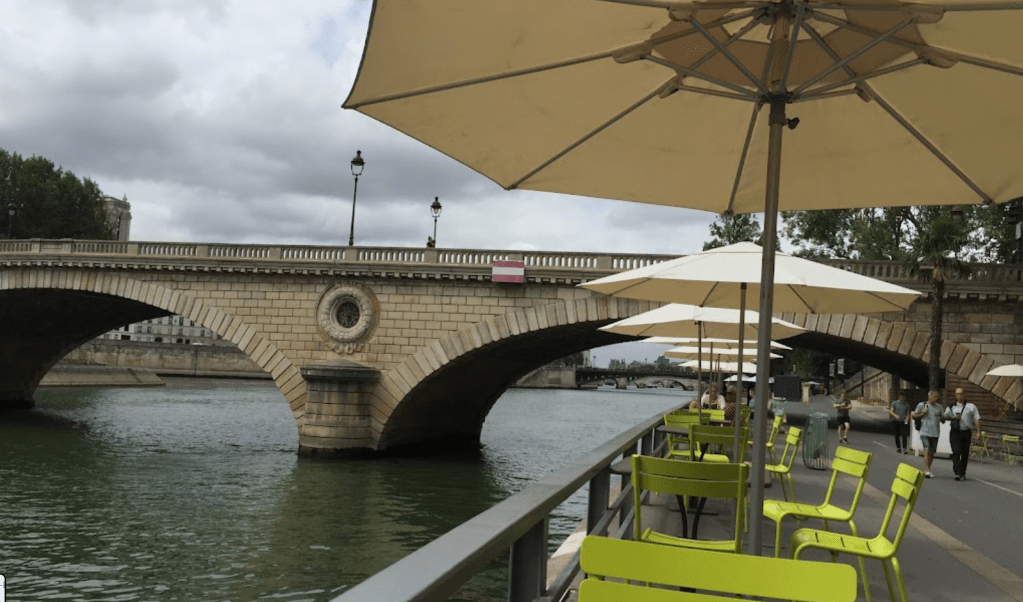
We recommend that you do this after the Pont Marie (early 17th, one of Paris’ oldest), so that you can cross this part of Le Marais, through the Village St Paul, with its antics (and other stuff) stores.
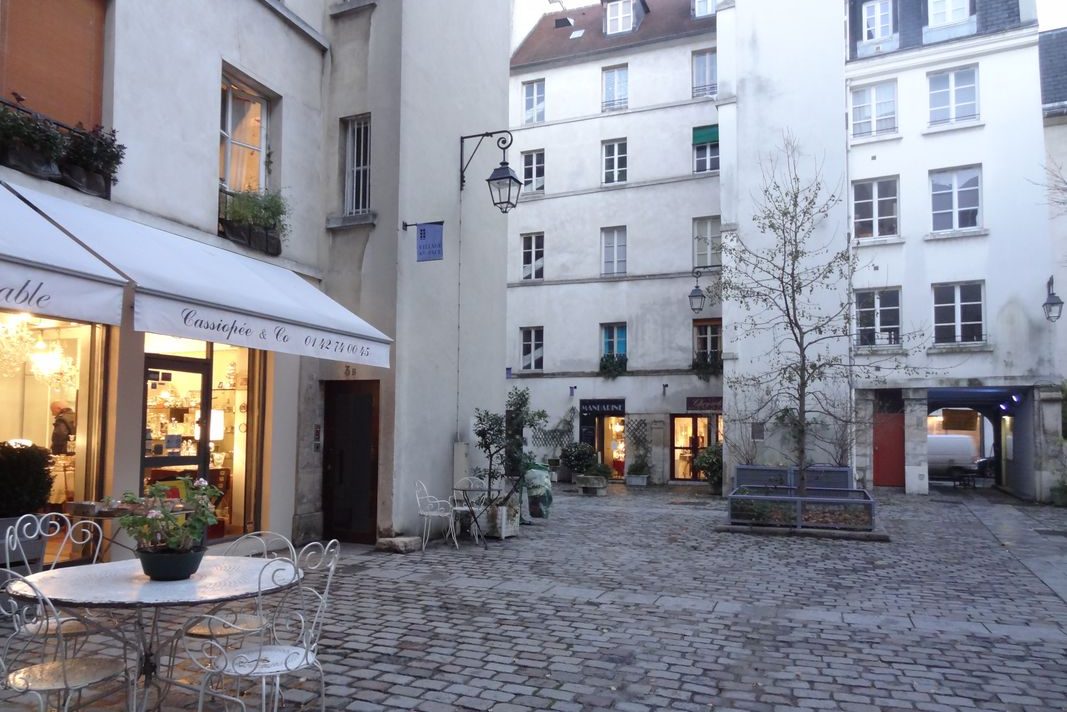
You should reach the Rue de Rivoli just right to stop by the Place Sainte Catherine, very charming, and, despite its denomination, easy to miss from all sides.
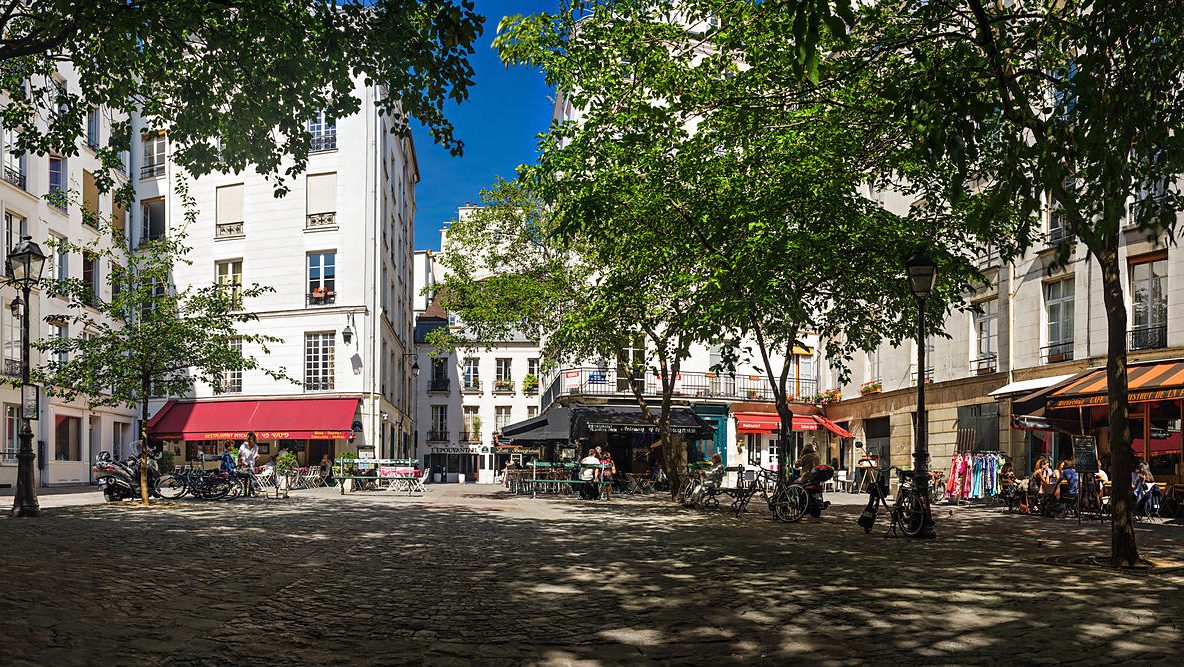
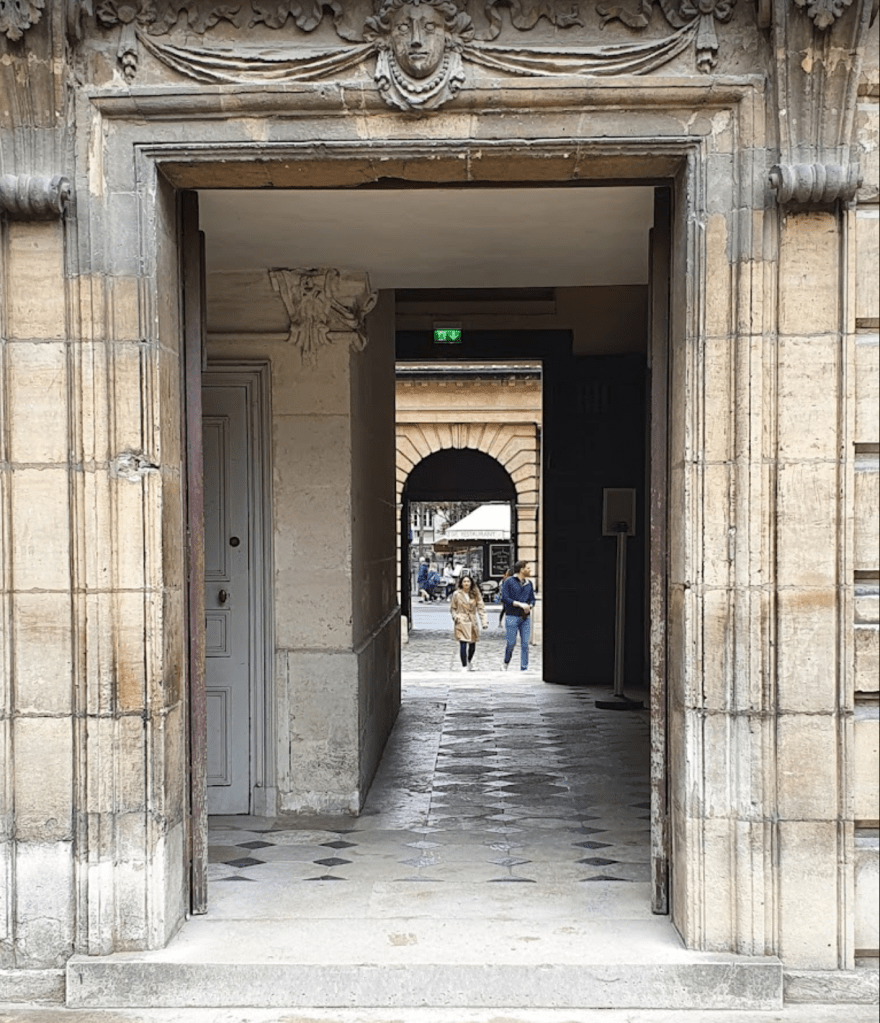
Here we suggest a little detour, so that you try to reach the Place des Vosges going through the Iconic Hotel de Sully(*) (1630), one of the first who was restructured following a famous law, named after France’s first Cultural Minister, André Malraux. If you have a little time, don’t hesitate to have a look around, there are usually interesting exhibitions there, and the architecture is stunning.
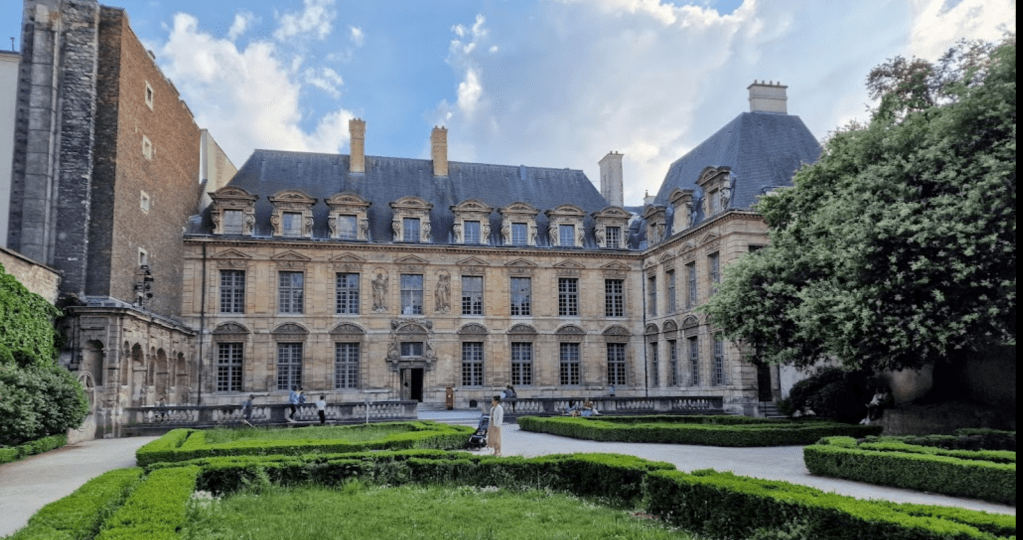
But you need to find the “secret” passage (well, by now it might be indicated), toward the end of the first courtyard, to Sully’s garden.
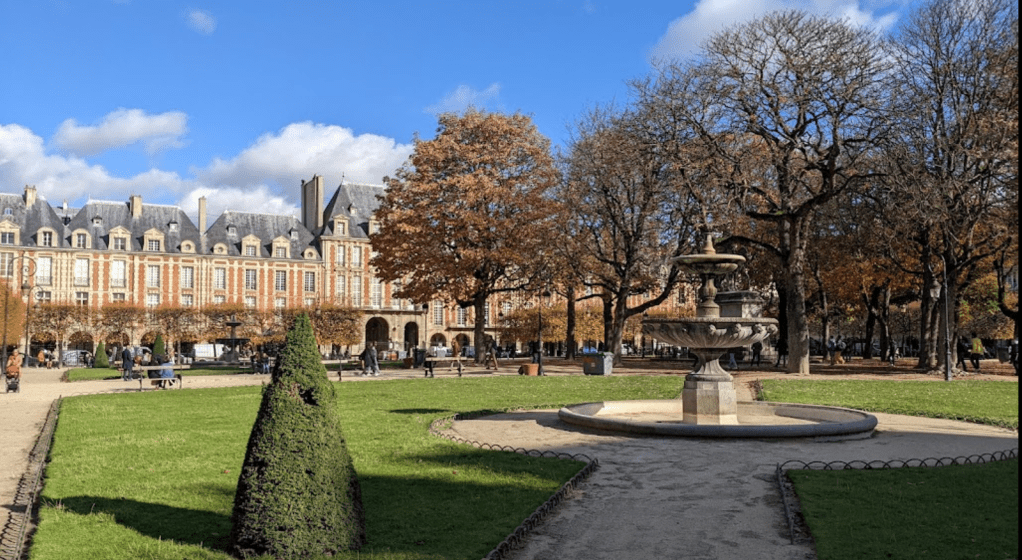
Then you cross them, and on the opposite side, there is a narrow passage reaching directly the Place des Vosges (1612). Now you’re a real Parisian.
No need to introduce this one. Only to mention that there are two jewels there. The Musée Victor Hugo, in the house where he lived from 1832 to 1848, and l’Ambroisie, one of the best restaurant we can think of, sharing maybe the top spot with Alain Passard’s l’Arpège.
Another detour via the rue Payenne, so that you get to enter the Swedish Cultural Institute (Hôtel de Marle, 1572), not only with an outstanding coffee, but do try the carrot cake! (in fact, the coffee isn’t quite italian).
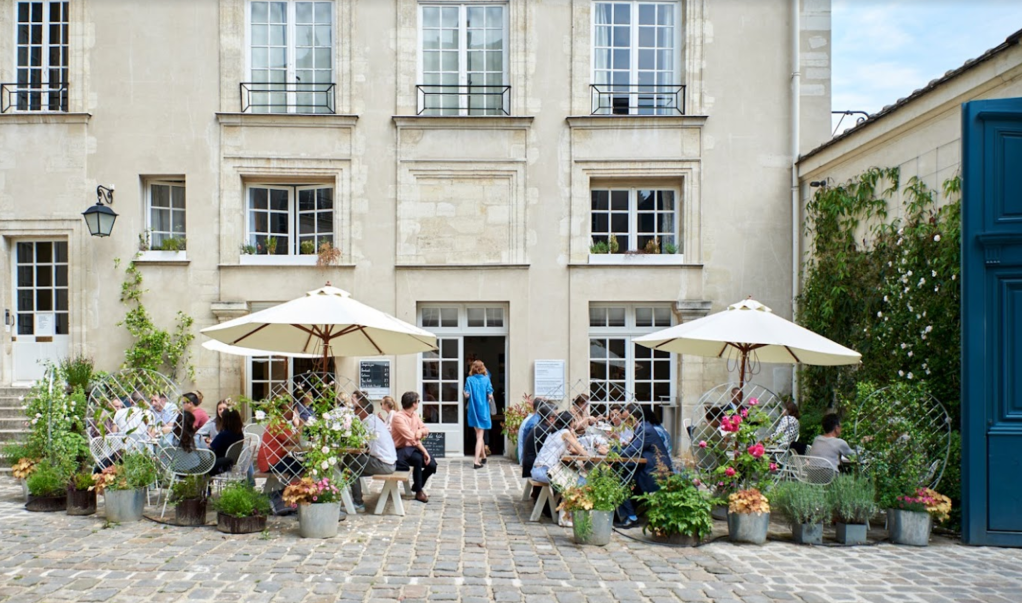
From there, it’s a 5mn walk to the Picasso Museum.
(*) “Hotel”, used to name many old buildings within the center of Paris stands for “Hôtel Particulier“, not the hotel you book a room into. It could maybe be translated into “private mansion”. This mono-family urban housing model was initiated in the middle ages, and persisted until the early 20th century. Within Paris, it peaked in the 16th and 17th century, together with the development of the Louvre Palace. It is estimated that there are still around 500 Hôtel Particulier within Paris, the most famous ones being transformed into museums, cultural or political institutions.
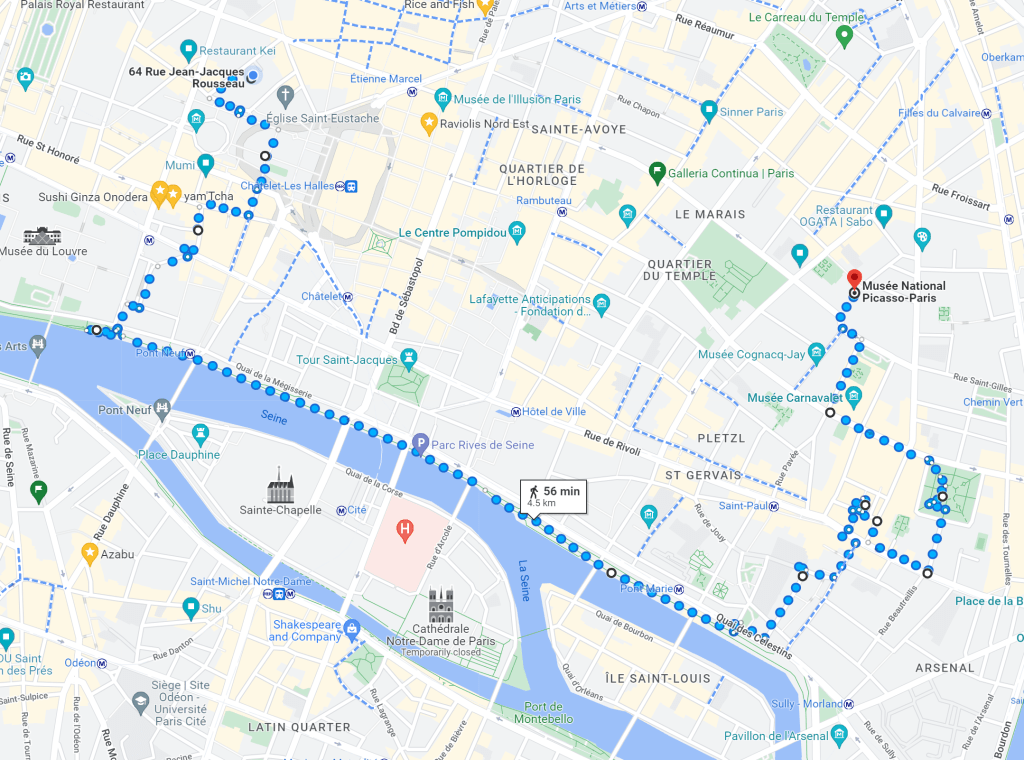
 Rue Jean Jacques Rousseau